
*This post may contain affiliate links, which means I may earn a small commission.*
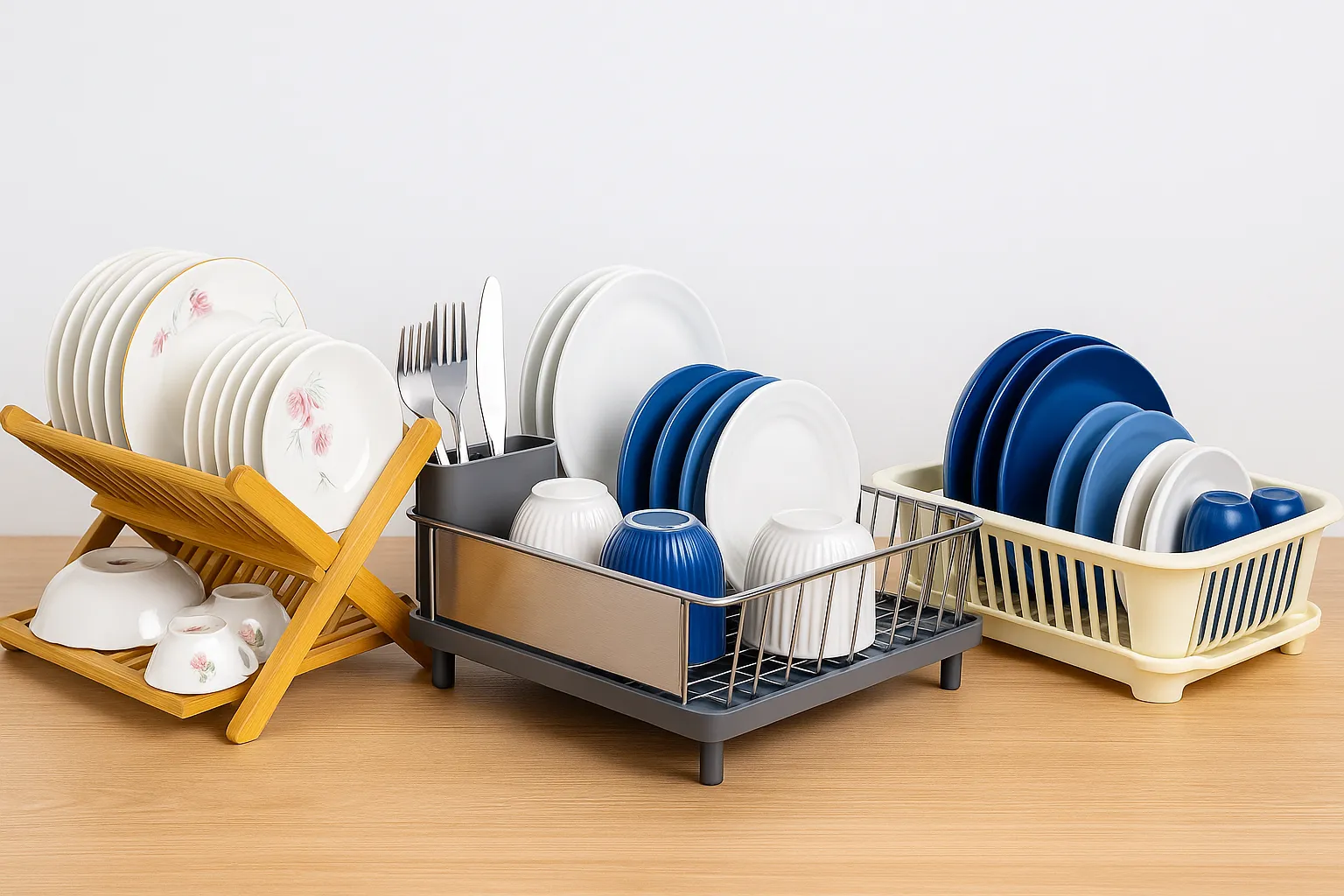
Picking the best material for a dish rack isn’t as straightforward as it sounds. You’ve got bamboo with its natural charm, sturdy metal options, and plastic racks that seem to be everywhere. But which one actually holds up—and makes sense for your routine?
It depends on what matters most to you: looks, durability, ease of cleaning, or how sustainable it is. Here’s how they really compare so you can pick the one that fits your kitchen—and your habits—best.
Table of Contents
Quick Comparison Table
| Feature | 🪴 Bamboo Dish Rack | 🧲 Metal Dish Rack (Stainless/Aluminum) | 🧼 Plastic Dish Rack |
|---|---|---|---|
| 🌱 Eco-Friendliness | Renewable, biodegradable | Recyclable, energy-intensive to produce | Sometimes recyclable, often non-renewable |
| 🛠️ Durability | Good with care | Excellent; stainless steel resists rust, aluminum resists corrosion | Can crack, sag, or discolor over time |
| 🧽 Maintenance | Needs drying, occasional oiling | Wipe dry, check for rust (especially at joints) | Easy to clean, but can stain or trap odors |
| 🦠 Mold/Rust Risk | Can mold if left wet | Rust possible if coating wears off | Mold-resistant but may hold bacteria in crevices |
| 🎨 Aesthetics | Warm, natural, stylish | Sleek, modern, polished | Functional, but can look basic |
| 📦 Features & Capacity | Foldable, minimalist designs | Often includes trays, cup racks, utensil holders | Varies widely; may include drainage spouts |
| ⚖️ Weight & Stability | Lightweight and portable | Heavier; more stable when fully loaded | Light and easy to move, but can slide or tip |
Bamboo Dish Racks: Natural Style with a Bit of Upkeep
Bamboo racks bring a relaxed, natural look to your kitchen. They’re lightweight, biodegradable, and appeal to anyone trying to keep things a little greener at home. Not all bamboo is created equal—look for well-made, responsibly sourced bamboo products if that matters to you.
Like anything made from wood, they do need some extra care. You’ll need to dry bamboo thoroughly after use and occasionally oil it to prevent cracking. Skip that, and you might end up with warping or mold. But if you’re okay with those small steps, bamboo makes a stylish and sustainable choice that feels a bit more personal than stainless steel.
Metal Dish Racks: Durable and Polished
If your kitchen sees a lot of action, metal racks are the heavy-duty option. Stainless steel is the most common and durable—it resists rust and holds up under weight. Aluminum, on the other hand, is lighter and rust-proof, though it may show water spots or wear faster depending on the coating. Some racks also blend metal frames with plastic trays, which can change how they hold up.
Most metal racks come loaded with handy extras, like expandable trays, utensil holders, or cup hooks. They’re built to last and look great in modern spaces. Just be aware of the finish: if it chips or wears off, rust can creep in, even on stainless steel, if water sits too long or the protective layer is scratched. Regular drying keeps both types in good shape.
Plastic Dish Racks: Lightweight and Low Effort
Need something quick, cheap, and easy? Plastic dish racks are probably what you’ve used before, and they’re fine for basic needs. No rust, no mold worries, and you can often toss them in the dishwasher.
But plastic isn’t without its issues. Lower-end plastics can warp, crack, or discolor, especially if exposed to heat or cold. Some hold onto odors, and not all plastics are recyclable. If you’re shopping for a plastic rack, look for BPA-free or food-safe labels, and aim for sturdy construction. These racks are best for temporary setups or light use, rather than long-term durability.
What About Silicone or Vinyl-Coated Options?
You might also come across racks made from silicone or with vinyl-coated wires. These are gentle on dishes and won’t scratch delicate glassware. Silicone mats or roll-up racks are flexible, easy to store, and perfect for drying smaller loads, especially over the sink. Vinyl-coated metal racks can be comfortable to use, but if the coating cracks, rust may follow.
If you’re looking for something soft, quiet, or collapsible, these could be good options to explore.
Hygiene and Cleanliness: What’s Safest for Your Dishes?
Ever noticed how grime builds up where the rack meets the counter? That’s where material can make a difference. Bamboo has natural antimicrobial properties, but it’s still porous, and mold can develop in crevices if it stays damp.
Stainless steel has a non-porous surface and is easy to sanitize. Aluminum is less prone to rust but can wear down. Plastic resists mold and rust but may trap bacteria and food particles in textured surfaces or tight corners.
Whichever material you pick, clean your dish rack weekly and dry it after use. If you notice mineral buildup or trapped gunk, a vinegar soak works wonders.
Avoiding Common Complaints: Real Issues and Easy Fixes
Nobody wants to regret their dish rack five days after buying it. Here’s what tends to go wrong:
Bamboo? It can swell or crack if it’s always wet. Drying it off and oiling it now and then really helps. Metal? Rust is the usual culprit, especially where trays meet frames or coatings wear off. Drying and gentle cleaning will stretch its lifespan. Plastic? It might sag or snap under too much weight, and can harbor smells if not cleaned well. Keeping it away from heat and not overloading it makes a difference.
Catch the small issues early, and most of these won’t turn into big ones.

Smart Design Features to Consider
A great rack isn’t just about what it’s made of. Design makes a big difference, especially when choosing the best material for a dish rack.
Look for racks with draining trays that don’t pool water. Got a small kitchen? Collapsible or over-the-sink styles can save space. Cup hooks, utensil holders, and non-slip feet all add up to a better daily experience. Stability matters too—heavier racks tend to feel more secure when fully loaded.
Even a basic material can be a great fit with the right features.
And don’t forget: dish racks should be wiped or washed weekly.
Ever stood in the aisle or browsing online, wondering if bamboo is really better than metal, or if plastic racks are just as good? That’s exactly what this guide helps clear up, so you don’t have to guess which one suits your kitchen best.
How to Choose the Best Material for a Dish Rack Based on Your Needs
It really depends on what kind of person you are in the kitchen.
If you like products with a natural feel and don’t mind a little upkeep, bamboo is probably your vibe. If you need something that just works, handles weight, and looks sleek, metal’s hard to beat. If you want a low-cost solution that’s quick to clean, plastic has your back.
Think about your habits, your space, and how much effort you want to put in. The right material will match your routine, not just your counter.
Still unsure? Scroll back to the comparison table above—it’s a handy way to spot which material checks the right boxes for your kitchen.
Quick Self-Check Before You Buy
Still on the fence? Ask yourself:
- Do I dry dishes by hand, or let them air dry?
- How much space do I actually have on my counter?
- Do I care about matching my kitchen style?
- Will I remember to maintain it?
- Do I care how long it lasts, or do I just need something now?
- Am I looking for something sustainable and responsibly made?
If you’re nodding along to eco-friendly goals and don’t mind upkeep, go bamboo. If durability and ease sound better, metal’s your match. If price and convenience are your top priorities, plastic works just fine.
Frequently Asked Questions
- What dish rack material is most eco-friendly? – Bamboo is one of the most sustainable options. It grows quickly, is biodegradable, and requires fewer resources to produce than many other materials.
- Can bamboo dish racks mold? – Yes, if not dried properly. Regular wiping and ventilation help prevent mold buildup, especially in the joints.
- Are all metal dish racks rust-proof? – Not exactly. Stainless steel resists rust well, and aluminum doesn’t rust at all, but both need to be dried regularly. If the coating wears down, rust can still form, especially at seams.
- Are plastic dish racks safe to clean in the dishwasher? – Some are, but not all. Check the label for dishwasher-safe symbols and avoid high-heat cycles that might warp the material.
- Do plastic racks last as long as metal or bamboo ones? – Usually not. They’re more likely to crack or warp over time, especially if exposed to sunlight or heavy loads.
- What’s the benefit of a silicone or vinyl-coated dish rack? – These options are gentle on dishes, quieter, and often more flexible or compact. Just make sure the coating doesn’t crack. Roll-up silicone racks also work well over the sink for drying glasses or rinsed produce—they’re lightweight and easy to stash in a drawer.
- Will stainless steel dish racks rust? – They resist rust well, but yes, it can happen—especially if water sits too long or the surface gets scratched. Wiping them dry helps prevent this.
- Will aluminum dish racks rust? – No, aluminum doesn’t rust like steel. It may show water spots or corrosion over time, but it won’t develop traditional rust.
- Are bamboo dish racks sanitary? – Bamboo has natural antimicrobial properties, but it’s still porous. It stays sanitary when dried properly and cleaned regularly.
- Do wooden or bamboo dish racks get moldy? – Yes, they can if left damp. Keeping them dry and well-ventilated helps prevent mold buildup.
- How do I prevent mold on a bamboo drying rack? – Wipe it dry after each use, store it in a well-ventilated area, and oil it occasionally to keep the surface sealed.
- What is the most hygienic way to dry dishes? – Air drying on a clean rack is more sanitary than towel drying, which can spread bacteria—just make sure to clean your rack regularly too.
- Is bamboo a good material for a drying rack? – Yes, bamboo is a good choice for those who want a lightweight, sustainable option with a natural look—just keep it dry to avoid mold.
Final Thoughts
Choosing the right dish rack doesn’t have to be complicated. It just needs to work for the way you cook, clean, and live. Bamboo brings beauty and sustainability, especially when responsibly sourced. Metal racks are strong, stable, and often the most durable. Plastic is simple, low-cost, and easy to care for—but it has limits.
Not sure yet? No problem—I’ve broken down my favorite bamboo dish racks if you want a closer look. The best material is the one that fits into your kitchen and makes cleanup less of a chore. Now that you know what to expect from each option, it’s easier to choose something that works for you and makes your space feel a little more like home.

Kristin is the founder of Eco Bamboo Living. She shares honest, research-backed guides and product reviews to help readers find bamboo products that are truly sustainable, practical, and worth bringing into their homes.
